

Stop Saying You Do It All. Start Saying Something That Matters.
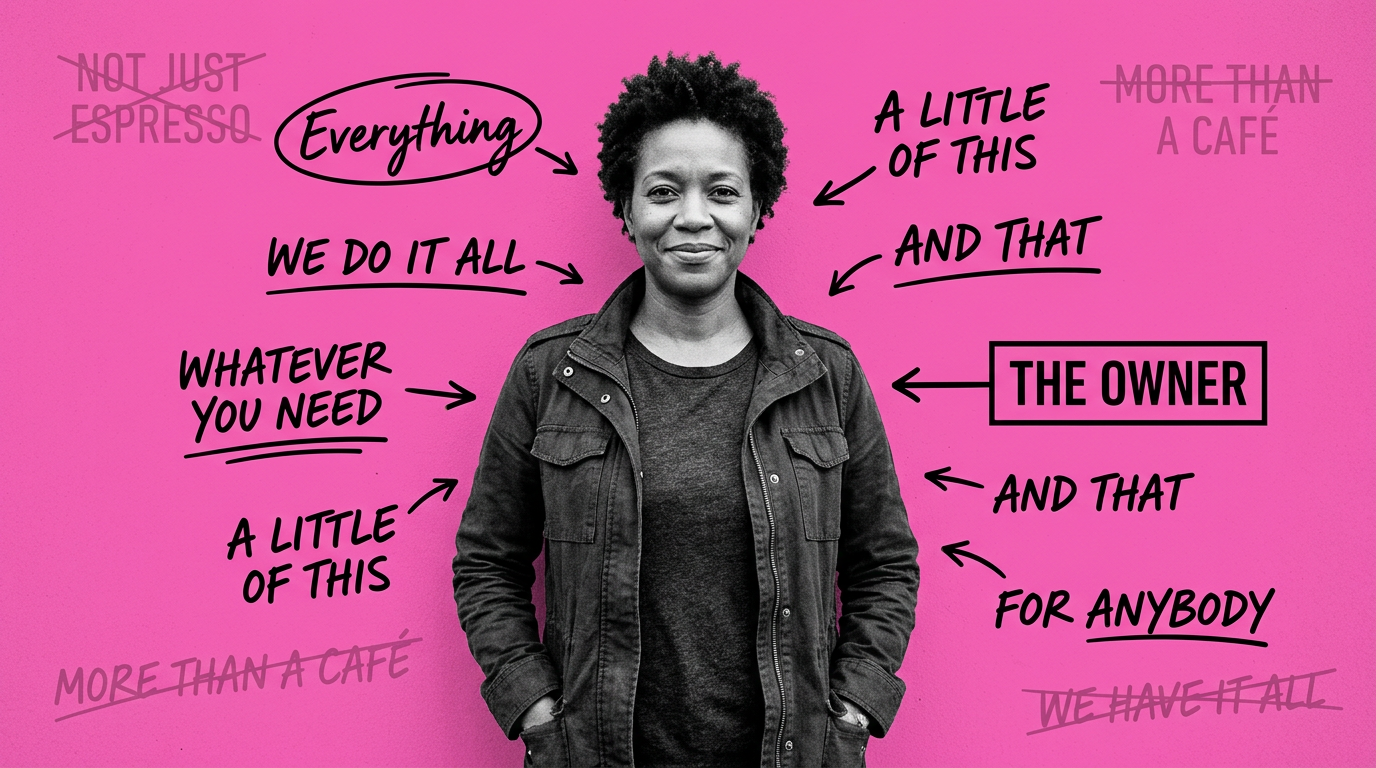
Why trying to be everything to everyone is quietly killing your business, and what to say instead.
By Eric Bryan Gonzales, Founder at AsturianMedia
So let's cut the fluff. If somebody asks what you do and your answer is basically a list, a little bit of this, some of that, oh and we also do this other thing, I've got bad news for you. You're losing people before they ever become customers. And it's not because you're not good at what you do. It's because you just made yourself invisible.
Because here's what a long list of everything actually says to a person. It says, I don't really know what I'm best at, so I'm gonna throw it all at you and hope something sticks. That's the message they hear, even if it's not the one you meant. And in a market this crowded, that doesn't just make you blend in. It makes you forgettable, which is a whole lot worse.
The most dangerous position is no position at all
Let me tell you what I see over and over again. Good businesses. Talented owners. People who are genuinely loaded with skill and range. And they're completely under-defined. They do a little of everything, they serve just about anybody, and they'll bend the offer to fit whoever's standing in front of them that day.
And here's the part that gets me. They talk about that like it's the selling point. "We can do it all." "Whatever you need, we've got you." But the more shit you say you can do, the less anybody believes you're actually great at any one of it. That's just how the brain works. You made yourself the safe generalist in a world that pays real money for the person who's clearly the best at one thing.
And that's exactly why people ghost you, or haggle you down on price, or just never find you in the first place. Trying to be everything isn't the flex you think it is. It's safe, it's vague, and it's forgettable. And worst of all, it dumps the whole job on the customer. Now they've gotta figure out whether you're right for them, because you didn't tell them what you own, what you're actually best at, or what they can trust you with. You said a lot and none of it stuck.
Your positioning shouldn't be a menu. It should be a mission. When somebody runs into your business, they should know right away who you're for, what you actually help them get, and why that matters to them right now. Not a list of everything you offer. Not a paragraph of buzzwords. Something sharp and clear. Because when you get clear on the thing you do better than anybody around you, you quit chasing customers. You just become the obvious call. That's the whole game.
So how do you actually get there
Here's how I walk business owners through it, using something I call the Business Clarity Code. I've used this exact thing to reposition short-term rental brands, main street shops, cultural institutions, service businesses, all of it. Works the same way every time. Here's the bones of it.
Decide what you actually want to be known for. Sit with a couple honest questions. If I could only be great at one thing for the next three years, what would it be? What problem do I genuinely love solving more than any other? And what do people keep thanking me for, no matter what they came in for? That last one's the tell. That's where your real position is hiding, and most owners walk right past it.
Talk about their problem, not your service. Your customer doesn't care about your list of services. They care about the thing that's bugging them. Nobody's shopping for "web design." They're worried their business looks sloppy online and it's costing them trust. So quit leading with what you do and start naming what they're actually dealing with. One of those speaks about you. The other speaks about them. Guess which one gets the call.
Say one thing loud instead of ten things quiet. You don't have to throw away everything you're good at. You just have to lead with one thing and let the rest back it up. Plant your flag on the thing you want to own, then let the other stuff support it underneath. When people know the one thing you stand for, that's the thing that builds the trust. A mile-wide, inch-deep pitch builds nothing.
Say it the way you actually wish somebody would say it to you. Be real, most business descriptions are just a wall of what-we-offer. No point of view, no voice, no edge, nothing that makes you feel like these people get it. So flip it. Instead of "we do a little of everything," say the one clear thing: who you help, what you help them get, and why it matters. All in one punch. That's the version people remember.
Quit trying to please everybody and state your standard. Your business shouldn't be built around chasing whoever walks by. It should be built around belonging. Tell people the kind of customer you're genuinely best for. And be willing to say who this is flat-out not for. Draw the line and then invite the right people over it. It was never about pleasing everybody. It's about calling the right people in with enough confidence that they know they found their person.
Want to tighten your own thing up? Here's the homework
Give it thirty minutes and answer these straight. No jargon, no fluff, no hiding from it.
What problem do I solve that my people already know they have? What's the before and after of working with me? What outcome would I die on a hill to deliver? What would I never do again no matter what the check said? And can somebody describe what I do in one plain sentence, without it turning into a list?
If those answers come out fuzzy, well, there's your next move right there. Because clarity isn't some nice-to-have anymore. It's the entry fee just to get in the conversation.
Where I land on this
The market does not need more businesses that do a little of everything. It's drowning in them. What it needs is clear promises, real results, and people with some actual conviction behind what they do. Your customers are already overloaded and worn out. They are not sitting there comparing feature lists. They're looking for somebody who gets it, and more than that, gets them.
So be the business that says something real. Own the outcome you deliver. And talk about your work like you actually believe in it. Because once you do that? You quit sounding like everybody else on the block. And you start getting paid like you're the only one who can do the thing. Which, once you get clear, you kind of are.