

Nobody Cares About Your Town. Until You Do This.
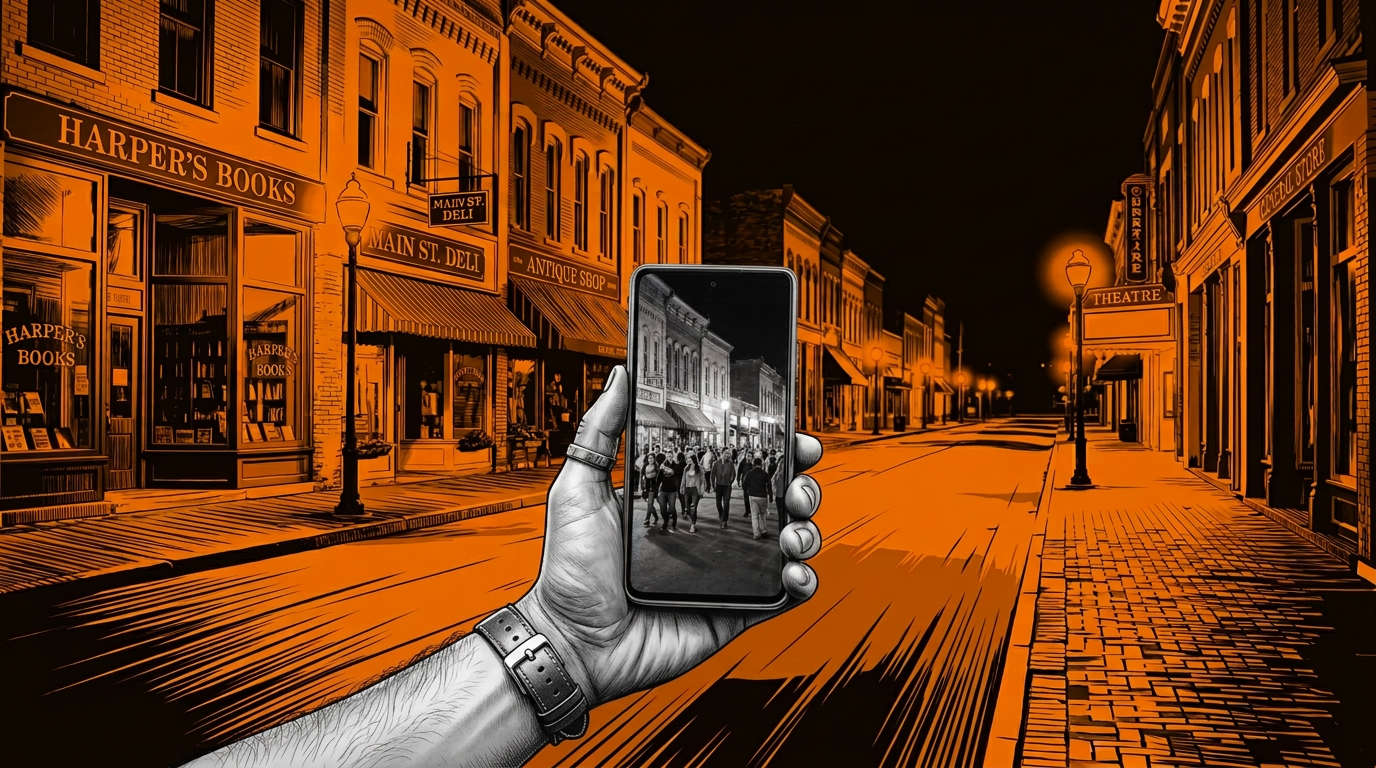
The relevance playbook for small towns, cultural districts, and historic destinations.
By Eric Bryan Gonzales, Founder at AsturianMedia
Let me start with something that's a little hard to hear. Nobody cares about your town. Not yet. Not the way you do. Not the way your volunteers do, and definitely not the way the families who've been there for generations do. To them it's everything. To everybody else, right now? It's a place they drive through.
They scroll right past your history. They skip your events. They drive straight through with no pause, no photo, no memory of it at all. And here's the thing, it's not because your town isn't worth caring about. It's because the world doesn't feel it yet. They don't feel the thing that makes your place matter. And until they feel it, you stay invisible. Doesn't matter how much soul the place has if nobody outside can feel it.
Relevance isn't about size. It's about signal.
I've worked with enough small towns and main streets and historic districts and little forgotten downtowns to know one thing for sure. They all have a soul. Every single one. What they don't have is signal. They've got no clear message. They don't know what they're actually supposed to make a visitor feel. And they've never learned how to take that soul and turn it into attention.
Because here's the truth nobody wants to say. People don't care about your preservation efforts. I know, that stings, especially if you've poured years into it. But they don't. What they care about is how you make them feel. That's it. That's the whole thing.
And most towns are out there marketing the wrong stuff. They're selling features. Old buildings. Historic tours. Artisan vendors. Walkable streets. That "family-friendly" thing everybody says. But none of that is emotion. None of it is identity. None of it makes the visitor the hero of the story. And that's exactly why people will drive right past a town with real depth to go hit some trendy little Instagram town that figured out its story. The shallow town won. Not because it's better. Because it made people feel something.
So that's the shift we've gotta make. From historical to human. Because what you're really selling was never the building or the shop or the date on a flyer. You're selling a moment. You're selling a memory somebody hasn't made yet, an emotion they didn't even know they were looking for. And until your message reflects that, you'll keep printing flyers nobody reads and running events nobody shows up to and wondering why none of it sticks.
So how do you actually shift it
Here's what I teach, and it's the stuff that's helped towns and districts get their attention and their pride back. Let me break it down.
Figure out what you're really in the business of. You are not in the education business. You are not in the small-town charm business. You're in the transformation business. So ask the real question. When somebody visits, what do they feel different about afterward? What kind of person do you want to pull in, and who do they get to be while they're in your town? That right there is the actual story. That's the hook. Not the founding date.
Lead with feeling, not features. Nobody gets fired up about "Preservation Week." But they'll show up for "step into the story that built this place." So quit leading with the facts and lead with the feeling. Turn your experiences into something that actually moves somebody. "Historic Train Depot Tour" is a fact. "The ride that changed this whole region, and the stories it left behind" is a reason to get in the car. Use curiosity. Use mood. Use identity. Give people a feeling to chase.
Make content for the feed, not the brochure. What works on a rack card does not work on Instagram. Those are two different planets. If your town's page looks like a newsletter instead of a destination, it's time to rethink the whole thing. You need vertical video. You need somebody talking to the camera like a real person. Reels that show the mood of the place, not just the buildings. Captions that sound like a friend saying "you have got to see this," not a committee checking a box. Big difference, and people feel it instantly.
Treat your town like a brand with a soul. The big brands know their vibe, their voice, their why. Your town should too. So ask it out loud. If our town was a person, how would they talk? What would they stand for? What would they flat-out never do? Answer that and you get consistency, and consistency is the thing that builds trust over time. A town that sounds like ten different committees sounds like nobody.
Let the locals carry the story. The best marketing does not come out of city hall. It comes from the shop owner, the artist, the person running the BBQ pit every Saturday. Those are your storytellers. So give them the tools. Give them prompts. Give them a platform and get out of the way. Let the people who genuinely love your place be the ones telling everybody else why they should love it too. That's the stuff people actually believe.
So let me ask you straight
Are you marketing your town, or are you actually sharing its heartbeat? Are you chasing attention by trying to look professional, or are you building the kind of real emotional relevance that makes people want to come, stay, share it, and come back again? Because those are two completely different games, and only one of them works anymore.
People aren't out there looking for history. They're looking for belonging. They're looking for meaning. They're looking for a place that feels alive, even if it's a hundred and fifty years old. Give them that and the history takes care of itself.
Where I land on this
If nobody's caring about your town right now, it is not because it doesn't matter. Let me be clear about that. It's because the story hasn't been told yet in a way anybody can actually feel. That's a fixable problem. That's a story problem, not a worth problem.
Once you start sharing what makes your town human, not just historical, not just scenic, not just charming, everything shifts. The attention follows. The engagement grows. The pride comes back around. And the town finally gets seen for what it actually is. Which, if you've been paying attention this whole time, is something worth driving out of the way for.