

What Business Are You Actually In?
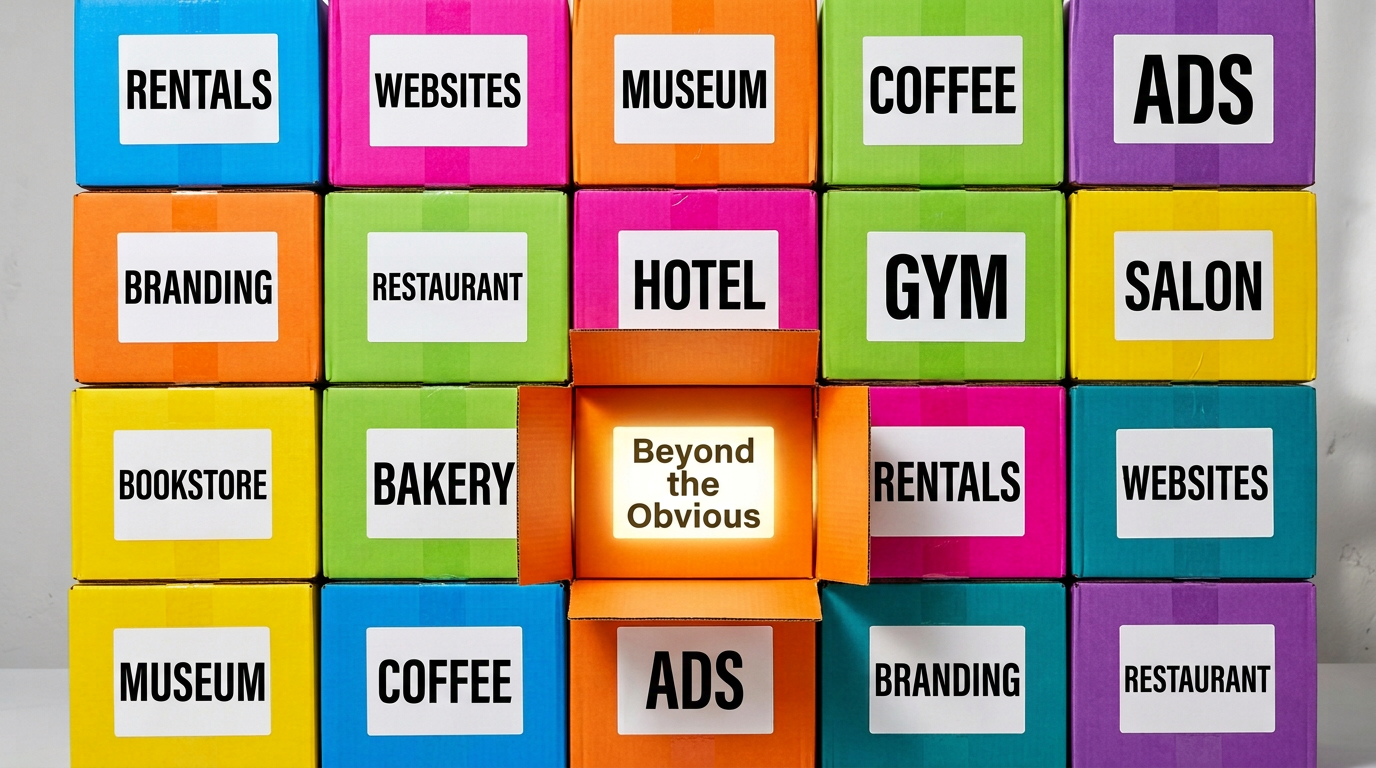
How owners lose relevance by mislabeling their own business.
By Eric Bryan Gonzales, Founder at AsturianMedia
You've probably said it a hundred times. To clients, to investors, to friends at dinner. "We're in the whatever business." The vacation rental business. The branding business. The museum business. The restaurant business. And you say it with real confidence, because it feels true. It feels accurate. It feels safe. Until it isn't.
Until the bookings slow down. Until the traffic flatlines. Until the whole brand feels out of step with what people are actually paying attention to. And then you're standing there scratching your head.
I've worked with legacy businesses, founders, small-town boards, cultural organizations, and so many of them say the same thing. "We've been doing everything right. So why does it feel like we're getting overlooked?" And honestly, my answer is almost always the same. You're probably not in the business you think you're in.
The most dangerous assumption in business
Here it is. Thinking your product defines your position. It doesn't. It never did. And if you define your business by the surface-level thing you sell, you are always going to be one trend away from becoming irrelevant. Always.
Let me give you a real one. A small-town museum director told me once, "we're in the education and preservation business." And I had to stop her. No. That's what you believe in. That's your function, sure. But that's not the business you're in. Because the people walking through the door? They are not looking for preservation. Nobody is Googling "educational experiences" on a Saturday. They're looking for something to feel. Something to belong to. Something actually worth leaving the house for. That museum was in the experience business, right alongside every other destination and attraction in town. Their messaging just never once reflected it.
Same thing with an STR owner who told me, "I'm in the short-term rental business." Nope. You're not selling beds and square footage, my friend. You're selling the feeling somebody wants the second they walk into your place. You're in the reconnection business. The peace-and-quiet business. The "I finally got to exhale" business. The STRs that stay booked own a feeling, not just a floor plan. That's the whole difference between a place that gets rebooked and a place that competes on price forever.
And founders get this wrong constantly too. "We sell websites." "We do social media." "We help with ads." Okay, cool. So does everybody else on the planet. And until you can say clearly what you actually give people that nobody else does, you're just a commodity with a price tag stapled to it. Nothing more. And commodities get shopped on price until they bleed out.
Here's the uncomfortable part
If your business feels stagnant, or underbooked, or straight-up ignored, you probably just haven't gotten clear on what you're really selling yet. And that's not me judging you. It's just the reality of the thing.
Because look at what happens when you mislabel your own business. Your content ends up talking to the wrong people. Your offer lands flat no matter how good it actually is. Your relevance quietly fades. Your growth slows to a crawl. And eventually you start wondering whether people even want what you built anymore. But here's the thing. They probably still do. They just don't understand what it really is yet, because you haven't told them in a way they can feel. And that gap, right there, is exactly where clarity comes in.
This is the whole foundation of the Business Clarity Code
Before you brand anything, before you post or advertise or try to scale, you've gotta answer one question. What business are you actually in? Not in your head. Not in some abstract mission-statement way. In a way your audience can feel immediately and go, "oh, that's the thing I've been looking for."
Because when you finally nail down what you actually provide, emotionally and experientially and strategically all at once, every other part of the business starts falling into line. You quit chasing attention and you start earning it. Because now people can feel the truth underneath what you're offering, and people move toward things that feel true.
So here's how to start digging it out
Give it ten honest minutes today and sit with these.
One. What outcome do we actually create for people? Not the service, not the deliverable. The shift, emotional or practical, that happens after they deal with you. What's different for them afterward?
Two. What do people say they felt when they experienced us? Go back through the emails, the texts, the offhand comments, whatever you've got in their own words. Look for words like "finally" and "relief" and "understood." There's gold buried in the language people use when they're not being careful about it.
Three. If somebody stripped away your product entirely, what's left? If your offer just vanished tomorrow, what would people actually miss? That thing they'd miss, that's your real value. Not the product. The hole it would leave.
Four. What business do you flat-out refuse to be in? This one sneaks up on you, because what you won't do reveals your values, and your values shape your position whether you meant them to or not.
Five. What would you fight for even if nobody paid you a dime to do it? That's the identity question. And identity builds the kind of resonance that no algorithm, no ad budget, and no clever tactic will ever manufacture for you.
Where I land on this
The businesses breaking through right now are not the ones shouting the loudest. They're the ones saying something real and saying it with precision. They know exactly what business they're actually in, and they've lined up every single part of their strategy to reflect that one truth. That's it. That's the unlock.
So if you're stuck in the noise, or the traction's slow, or your messaging feels foggy and you can't figure out why, start right here. Ask the harder question. Get brutally honest about what you're really offering people. Because once you do that? They'll feel it. They'll finally get it. And they'll move.