

You're Good at What You Do. So Why Isn't Anybody Looking?
Being good and being chosen are two different jobs, and almost nobody is doing the second one on purpose.
By Eric Bryan Gonzales, Founder at AsturianMedia
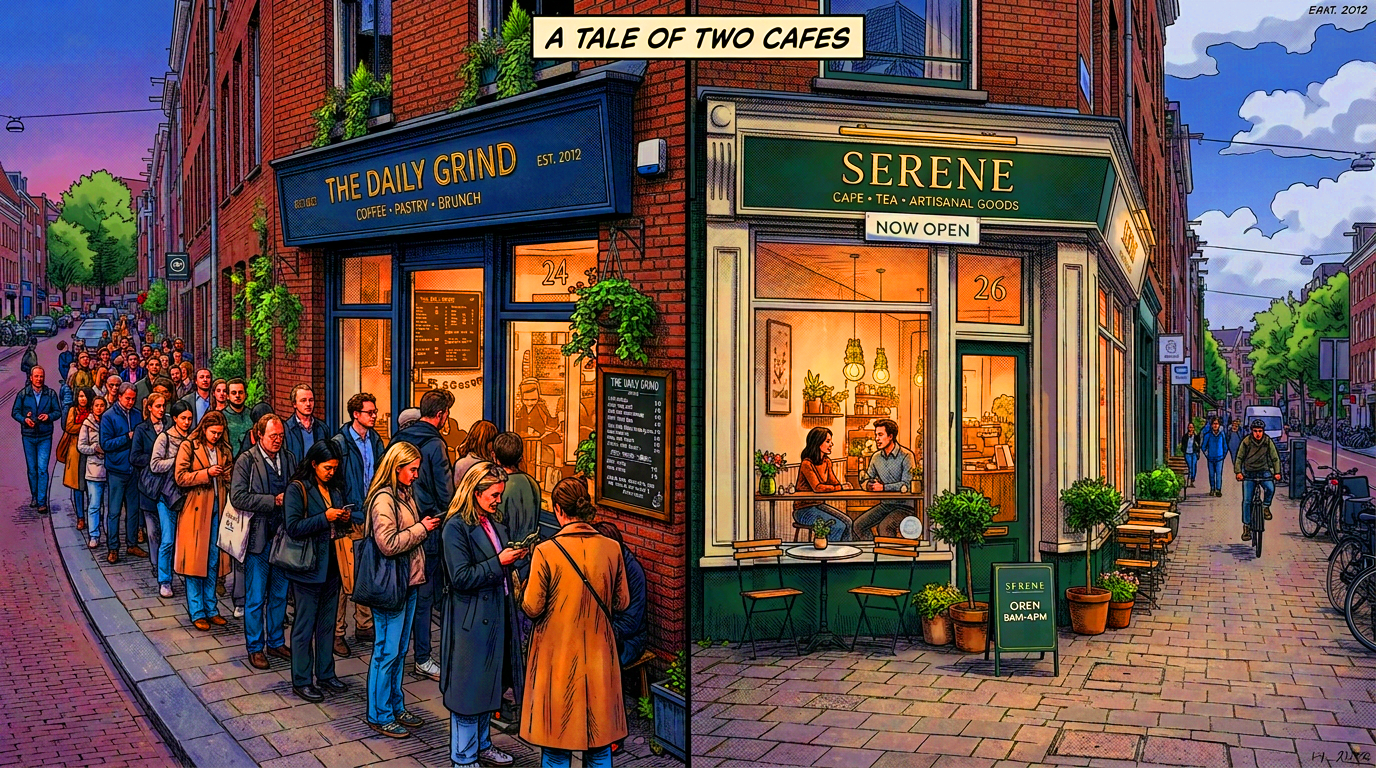
There's a restaurant I still think about. The food was genuinely great. Not fine, not decent, actually great, the kind of meal you'd cross town for. The owner knew his stuff, cared about every single plate, sourced the right ingredients, did everything a good restaurant is supposed to do. And the place was dead. Not slow-Tuesday dead. Dead like you'd walk past and quietly wonder how the hell he was still making rent.
And here's the part that used to eat at me. Two doors down there was a spot with worse food, and it had a damn wait. A line out the door on a Friday night. And if you asked that first owner why, he'd tell you people just don't appreciate quality anymore, or the location's bad, or the economy, or whatever story let him off the hook. Anything except the real reason. Because the real reason is the one that stings.
He was good. He just wasn't chosen. And those are two completely different things, and almost nobody figures out they're different until the lights are already going off.
Good is the entry fee. That's all it is.
Somewhere along the way most of us got sold a lie. The lie goes, be good enough at the thing and the rest sorts itself out. Do great work and the work speaks for itself. And it sounds noble as hell, right? Sounds like the honest, heads-down, blue-collar way to build something real. Just get good and the world comes knocking.
But the world doesn't come knocking. That is not how any of this works, and I wish somebody had grabbed me by the collar and told me that twenty years earlier. Being good gets you in the game. That's it. It's the cover charge. It does not, on its own, get you picked over the other people who are also good, and it sure as hell doesn't get you picked over the people who are worse than you but easier to choose. And that last one is the one that really pisses people off. You will lose customers to businesses that are flat-out worse than you, over and over, because they cracked the second job and you never knew there was one.
The second job is being chosen. And being chosen has almost nothing to do with being better. It's about being clear, being findable, being the obvious call for a specific person at a specific moment. It's a whole separate skill from doing the work well, and nobody teaches it. There's no apprenticeship for it, no trade school, no old-timer showing you the ropes. You can spend twenty years mastering your craft and still be a complete rookie at the thing that actually puts asses in seats.
The barber who thought he sold haircuts
Let me tell you about a barber I knew. Good with the clippers, been at it forever, real skill in those hands. And he was dead sure, all the way down, that he was in the haircut business. Guy walks in, hair's too long, he makes it shorter and cleaner, guy pays, guy leaves. That was the whole deal in his head. Cut hair, take the money, do it again tomorrow.
And because that's how he saw it, that's how he ran the whole thing. His pitch, on the rare day he even bothered to pitch, was basically "I give good haircuts." Which, okay. So does every other barber inside ten miles. "Good haircut" is not a reason to pick him. It's the bare minimum everybody's already claiming. He was competing on the one damn thing that couldn't set him apart, and then scratching his head about why it was always a coin flip whether a guy walked into his chair or the shop down the road.
Here's what he never saw. The guys who kept coming back, who drove past three other barbershops to sit in his chair specifically, they weren't there for the haircut. Not really. They were there because for thirty minutes somebody actually listened to them. Because he remembered their kid's name, and their team, and the thing they were stressed about last time they came in. He was in the somebody-is-glad-to-see-me business and he had no clue. He was selling the one thing he thought mattered and giving away the thing that actually did, for free, without even knowing he was holding it.
And that's the trap, right there. When you think you sell the obvious thing, you compete on the obvious thing, and the obvious thing is exactly where every single one of you looks identical. The real reason people choose you is almost always hiding one level down, in a spot you quit looking at because you were too busy being good at the surface.
Here's what I would've done
If that restaurant owner had come to me before the place went quiet, or that barber before he started blaming the economy for his empty chair, here's honestly where I'd have started. Not with marketing. Not with a new logo, not a fresh batch of ads, not posting more on social. All of that comes way later, and none of it does a damn thing until you handle this first part.
I'd have gone straight to my three happiest customers. Not a survey. Not a form. Not one of those automated "how'd we do" emails nobody answers honestly anyway. A real conversation, face to face. And I'd have asked them two dead-simple questions. What made you pick me the first time? And what made you come back? And then, this is the whole thing, I'd have shut my mouth and let them talk, and I'd have written down their exact words. Not my cleaned-up version of their words. Theirs.
Because I promise you, they will not say what you think they're going to say. The restaurant guy would've braced for something about the food and instead heard about how it felt to walk in, or the way he came out to the table himself, or that it was the one place his wife actually unclenched after a long week. The barber would've expected "great cut" and gotten "I don't know, man, I just like coming here." And that vague-sounding answer, "I just like coming here," that's not nothing. That's the entire business, sitting right there in the customer's own words, handed to you for free.
And once you've got that, once you can actually see in their language what they chose you for, everything downstream gets easier. Now you know what to say. You know what to lead with. You know what to build the whole operation around. You quit competing on "I'm good" like every other poor bastard in your category and you start standing on the real reason people pick you. But you can't do a bit of that until you've heard it. And you'll never hear it if you never ask.
The quiet ones aren't the worst ones
That's the part nobody says out loud. The businesses sitting there empty, overlooked, quietly convinced something's wrong with everybody else, a lot of those are not the bad ones. Some of them are the best in town. They're just stuck grinding away at one job, the good job, never realizing there was a second one the whole time. And the second job is the one that fills the room.
So if you're good and nobody's looking, sit with that before you spend another dollar trying to get louder. Louder doesn't fix this. It never has. Getting clear on why the right people already choose you, that's the fix. So go ask them. Write down what they actually say, word for word. And build from there. The chairs don't fill because you got better. They fill because you finally got chosen on purpose.